Implants, Bridges, or Dentures? A Practical Decision Guide
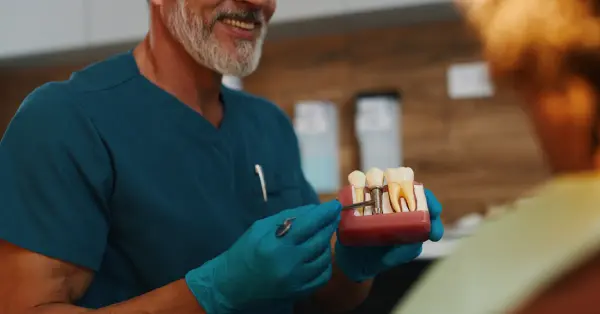
Losing a tooth can affect more than just your smile. When a gap is left untreated, the surrounding teeth may gradually begin to shift out of place. This movement can change the way your teeth fit together, affect how you chew, and create new areas where plaque and food can collect.
If you are weighing your options for tooth replacement, this guide compares dental implants, bridges, and dentures with patient-centered decision points. It is also written to support people searching for dental implants in Largo, MD who want to understand how implants stack up against alternatives before scheduling a consultation.
TL;DR - Choosing Between Implants, Bridges, and Dentures
The "best" tooth replacement depends on your goals for stability, upkeep, and long-term bone support. Many patients prefer implants for a fixed feel, while bridges or dentures may make sense when anatomy, timeline, or preferences point that direction.
- Implants can replace a tooth without relying on neighboring teeth and may help support jawbone where the tooth is missing.
- Bridges are fixed in place but often depend on adjacent teeth for support.
- Dentures are removable and can replace multiple teeth, but stability and fit can vary.
- Bone grafting may be recommended before an implant when there is not enough bone for ideal support.
- An exam and imaging help confirm what options are realistic for your specific bite and bone.
Start With Your Real Goal: What Do You Want This Tooth To Do?
Comparison articles can feel overwhelming because they list features without reflecting how people actually choose. A simpler starting point is to decide what matters most to you:
- Most natural feel: prioritize a fixed option that bites like a tooth.
- Replace multiple teeth at once: prioritize broad coverage and easier cleaning routines.
- Preserve the nearby teeth: prioritize an option that does not depend on shaping neighboring teeth.
- Minimize surgery: prioritize solutions that may not require a surgical appointment.
How Dental Implants Compare (And Why Many Patients Prefer Them)
A dental implant replaces the tooth root with a small post in the jaw and supports a crown above the gumline. This approach is often chosen for its stability and independence from the teeth next to the gap.
For a detailed overview of candidacy and what the procedure typically includes, see our page on dental implants in Largo, MD.
Pros of Dental Implants
- Independent support: an implant stands on its own rather than leaning on neighboring teeth.
- Strong chewing function: many patients find they can bite more confidently than with removable options.
- Helps support the area of missing bone: implants can be beneficial in plans where long-term support is a priority.
Possible Tradeoffs
- More steps: implant care often includes surgical placement and healing time.
- Bone requirements: some patients need additional support (such as grafting) before an implant is placed.
Dental Bridges: A Fixed Option That Relies On Neighboring Teeth
A traditional bridge replaces a missing tooth by attaching a false tooth to crowns on the teeth next door. Many patients like that bridges are fixed in place (not removed at night), but it is important to understand the tradeoff: the supporting teeth often do extra work.
Pros of Bridges
- Fixed feel: no need to remove it for cleaning like a denture.
- Can be efficient: often completed without implant surgery when the neighboring teeth are appropriate supports.
Possible Tradeoffs
- Adjacent tooth involvement: the teeth next to the gap may need to be prepared to hold the bridge.
- Cleaning technique matters: you may need special flossing tools to clean under the bridge.
Dentures: A Practical Choice For Replacing Multiple Teeth
Dentures are removable appliances designed to replace several teeth (partial dentures) or all teeth (full dentures). They can be an effective solution, especially when multiple teeth are missing or when a removable option fits your preferences.
Pros of Dentures
- Replace many teeth at once: useful when tooth loss affects a larger area.
- Non-surgical option: many denture plans do not require implant placement.
Possible Tradeoffs
- Fit can change over time: gums and bone can change, so relines or adjustments may be needed.
- Stability varies: some patients notice movement, especially with lower dentures.
When Bone Grafting May Be Part Of the Implant Plan
If you have been missing a tooth for a while, or if an extraction site has limited bone support, your surgeon may recommend a bone graft in Largo to build or preserve the foundation needed for an implant.
You can learn more about indications and types of grafting on our bone grafting in Largo, MD page.
- Why it matters: adequate bone helps place the implant in a position that supports a stable bite.
- Not always required: some patients have enough bone without grafting.
- Timing varies: grafting may be done at the time of extraction or as a separate step, depending on your anatomy.
When an Oral Surgeon May Be Involved (And Why That Can Help)
Tooth replacement sometimes requires coordination between restorative dentistry and surgical care. An oral surgeon is commonly involved when implant placement, bone grafting, or complex extractions are part of the plan.
At Woodview Oral Surgery, Dr. Tania Nkungula evaluates surgical needs and helps patients understand what steps may be recommended for a safe, predictable foundation for tooth replacement.
A Quick Note If Wisdom Teeth Are Part Of Your Bigger Plan
Some patients start exploring tooth replacement while also dealing with impacted or painful wisdom teeth. If wisdom teeth are creating infection risk, crowding, or recurring discomfort, it may make sense to address them as part of a step-by-step plan.
Our related service page on wisdom teeth in Largo, MD explains what symptoms may signal a problem and what removal typically involves.
Experience From Our Team: The Most Common Decision "Turning Point"
In our experience, many patients feel stuck until they separate two issues: how they want the replacement to function day-to-day (fixed vs removable), and what their current bone and gum foundation will realistically support. Once those two points are clear, the best option often becomes much easier to choose.
FAQs
For many patients, a dental implant feels closest to a natural tooth because it is anchored in the jaw and does not rely on neighboring teeth for support. A bridge and a denture can also restore function, but they may feel different depending on fit, bite forces, and whether they are removable.
Not always. A bone graft may be recommended when there is not enough healthy jawbone to support an implant in the ideal position. Your surgeon evaluates bone volume and quality and may recommend grafting to improve stability and long-term support.
A traditional fixed bridge typically depends on the adjacent teeth for support. In many cases, those teeth are prepared for crowns, which can be appropriate in some situations but is not always ideal when the neighboring teeth are otherwise healthy. A personalized exam helps determine the best plan.
Dentures can be a practical option for replacing multiple teeth, especially when you want a removable solution. Some patients also consider implant-supported dentures for added stability. The best choice depends on bone support, gum health, bite, and your goals for comfort and maintenance.
An oral surgeon is often involved when implant placement, bone grafting, or more complex extractions are needed. If you have limited bone, a history of tooth loss, or you want to explore implant options, a surgical consultation can clarify what is possible and what steps would be needed.
Related Reading
- Dental Implants in Largo, MD
- Bone Grafting in Largo, MD
- Sedation Dentistry in Largo, MD
- First Visit
- Surgical Instructions
Conclusion: Choose the Option That Matches Your Bite, Bone, and Lifestyle
Bridges and dentures can be good solutions, and implants can be an excellent solution, but they serve different needs. A personalized evaluation (including imaging) is the most reliable way to understand which options fit your mouth today and what steps might expand your options.
Schedule a Consultation
If you want help deciding which tooth replacement is right for you, call Woodview Oral Surgery at (301) 341 0041 to schedule a consultation.






5 Stars
based on 15 reviews
5 Stars
based on 11 ratings